Infolinks In Text Ads

Thursday, January 26, 2017

Official Thailand Lottery Results – February 1st, 2017


Thailand’s official national lottery, The Thai Lottery is administered by The Government Lottery Office (GLO). The Thai Lottery Results are drawn on the first and the sixteenth of every month. It is one of only two forms of legalised gambling permitted in Thailand, the other being horse racing in Bangkok.


National Thailand Lottery is the only form of legal gambling that most people in Thailand have access to.

Click To Check Thai Lottery Results for February 1st, 2017


Thai Lottery Results are drawn on the fist and sixteenth of every month. A television show is built around this that starts at 3PM. Towards the end of the show (just before 4PM) the lottery numbers are displayed.

How to Claim Thai Lottery Prizes


Winning tickets can be redeemed for their prize at any Provincial Office of the Comptroller General’s Department (CGD). There is one of these in every province (3 in Bangkok). The tax is 0.5% of winnings. It is possible to redeem at shops though the fee is higher, about 2% is a typical price to negotiate to.

Thai Lottery Prizes


First prize for all six correct numbers is 2 million baht (TGL) or 3 million baht (TCL) per ticket. As tickets are sold in pairs, the published prize amount is doubled.[26] Doubling applies to all prizes except for the 22 million and 30 million baht bonus prizes. There are five second prizes of 100,000 baht, ten third prizes of 40,000, fifty prizes of 20,000 for fourth, one hundred 10,000 baht prizes for fifth and a 50,000 baht consolation prize for the six-digit winning number plus or minus one.


PrizeNumber of Prizes (Draws)Payout (baht)Notes
First: Thai Government Lottery (TGL) and Thai Charity Lottery (TCL)12,000,000 x 2 or 3,000,000 x 2Match 6 digits in first prize draw. Payout for TGL is 2 million; for TCL 3 million
Second5100,000 x 2Match 6 digits in second prize draw
Third1040,000 x 2Match 6 digits in third prize draw
Fourth5020,000 x 2Match 6 digits fourth prize draw
Fifth10010,000 x 2Match 6 digits in fifth prize draw
Special prize (±1)250,000 x 2Match 6 digits in first prize draw plus or minus 1
Match 3 digits4,0002,000 x 2Match 3 digit draw
Match 2 digits10,0001,000 x 2Match 2 digit draw
First prize bonus (TGL)*130,000,000Match 6 digit draw for first prize and match unit number draw
First prize bonus (TCL)*122,000,000Match 6 digit draw for first prize and match unit number draw

Official Lottery | Worldwide Lotteries by Country

A lottery is a form of legalized government gambling that involves the drawing of numbers for a prize. Lotteries are outlawed by some governments, while others endorse it to the extent of organizing a national or state lottery. It is common to find some degree of regulation of Official Lottery by governments; the most common regulation is prohibition of sale to minors. Though lotteries were common in the United States and some other countries during the 19th century, by the beginning of the 20th century, most forms of gambling, including lotteries and sweepstakes, were illegal in the U.S. and most of Europe as well as many other countries. This remained so until well after World War II. In the 1960s casinos and lotteries began to re-appear throughout the world as a means for governments to raise revenue without raising taxes.
Lotteries come in many formats. For example, the prize can be a fixed amount of cash or goods. In this format there is risk to the organizer if insufficient tickets are sold. More commonly the prize fund will be a fixed percentage of the receipts. A popular form of this is the “50–50” draw where the organizers promise that the prize will be 50% of the revenue.[citation needed] Many recent lotteries allow purchasers to select the numbers on the lottery ticket, resulting in the possibility of multiple winners.
The purchase of lottery tickets cannot be accounted for by decision models based on expected value maximization. The reason is that Official Lottery tickets cost more than the expected gain, as shown by lottery mathematics, so someone maximizing expected value should not buy lottery tickets. Yet, Official Lottery purchases can be explained by decision models based on expected utility maximization, as the curvature of the utility function can be adjusted to capture risk-seeking behavior. More general models based on utility functions defined on things other than the lottery outcomes can also account for lottery purchase. In addition to the lottery prizes, the ticket may enable some purchasers to experience a thrill and to indulge in a fantasy of becoming wealthy. If the entertainment value (or other non-monetary value) obtained by playing is high enough for a given individual, then the purchase of a lottery ticket could represent a gain in overall utility. In such a case, the disutility of a monetary loss could be outweighed by the combined expected utility of monetary and non-monetary gain, thus making the purchase a rational decision for that individual.
In several countries, lotteries are legalized by the governments themselves.

Australia:

In Australia, lotteries operators are licensed at a state or territory level, and include both state government-owned and private sector companies.

Canada

In Canada prior to 1967 buying a ticket on the Irish Sweepstakes was illegal. In that year the federal Liberal government introduced a special law (an Omnibus Bill) intended to bring up-to-date a number of obsolete laws. Pierre Trudeau, the Minister of Justice at that time, sponsored the bill. On September 12, 1967, Mr. Trudeau announced that his government would insert an amendment concerning lotteries.

France

The first known Official Lottery in France was created by King Francis I in or around 1505. After that first attempt, lotteries were forbidden for two centuries. They reappeared at the end of the 17th century, as a “public lottery” for the Paris municipality (called Loterie de L’Hotel de Ville) and as “private” ones for religious orders, mostly for nuns in convents.

New Zealand

Lotteries in New Zealand are controlled by the Government. A state owned trading organisation, the New Zealand Lotteries Commission, operates low prize scratch ticket games and Powerball type lotteries with weekly prize jackpots. Official Lottery profits are distributed by the New Zealand Lottery Grants Board directly to charities and community organisations. Sport and Recreation New Zealand, Creative New Zealand and the New Zealand Film Commission are statutory bodies that operate autonomously in distributing their allocations from the Lottery Grants Board.

United Kingdom

Check Official Lottery Results here: National Lottery (United Kingdom)
There is one National Lottery in the United Kingdom which is called The National Lottery currently has four games Thunderball, Lotto, Lotto Hotpicks and EuroMillions which is played on a pan-European basis. The National Lottery is operated on a franchise basis from the National Lottery Commission and is currently held by Camelot Group. A new Privately run lottery called The Health Lottery has recently launched.

India

There are many state lotteries in India but the most popular lottery in India is Kerala State Lotteries.
Check Official Lottery Results here: Kerala State Lotteries

Kerala State Lotteries was established in 1967, under the lottery department by the Government of Kerala, the first of its kind in India.

In 1967 all private lotteries were banned and the Government of Kerala started the Kerala State Lotteries. The idea behind the setup of the new department under the Ministry of Finance, (Government of Kerala) was from the then Finance Minister of the state, Shri. P. K. Kunju Sahib.

The objectives of starting Kerala state lottery were providing employment.[ to and supplementing the government finance without disturbing the public.

The department soon became a model for other states in India. Soon many other states jumped into the bandwagon by starting their own lotteries.

Thailand:

Thailand’s official national lottery is administered by The Government Lottery Office (GLO). The lottery is drawn on the first and the sixteenth of every month. It is one of only two forms of legalised gambling permitted in Thailand, the other being horse racing in Bangkok.
The lottery in Thailand is hugely popular despite the low odds of winning and the unfavourable payout ratio. The payout ratio for the Thai lottery is 60%, as compared with world-wide averages of 74% for bingo, 81% for horse racing, 89% for slot machines, and 98% in blackjack (basic rules). It is the most popular legal form of gambling in Thailand.
Check Official Lottery Results here: Thailand Lottery

Thursday, January 30, 2014

Going Bananas to Reduce Heart Disease and Boost Energy


Banana is the most valuable food crop, rank fourth worldwide behind rice, wheat and potatoes. Other than tasty and rich in fiber, banana is very popular healthy snack for fitness minded and athletes as it is sodium-free, fat-free, cholesterol-free fruits that contains high-grade protein with three of the essential amino acids, high level of sucrose, glucose, fructose and potassium to boost energy.

It is one of the few fruits which contain both easily digested complex and simple carbohydrates, complex carbohydrate give you endurance energy and simple carbohydrate give you quick energy.

Eating just two bananas might provide enough energy for an intense 90 minute workout.Banana contains five times the vitamin A and iron, twice the carbohydrate, three times the phosphorus and four times protein than found in apples.

Anemia – Contains high iron Alzheimer – Protect neuron cells against oxidative stress-induced neurotoxicity and may play an important role in reducing the risk of neurodegenerative disorders Baby Food & Growing kids – Help supply the energy needs of growing, active children. Blood Pressure – contains low in salt and yet high in potassium to reduce high blood pressure and stroke. Adding bananas to your diet is not only great for boosting energy.Fascinating Facts About the Natural Healing Power of Bananas.

Bone health – contains high potassium benefits to muscles and helps promote bone health. Brain Power Enhancement – More Alert and Focus. Constipation – High in fiber Depression or Seasonal Affective Disorder (SAD) – Contain natural mood enhancer tryptophan make you relax and feeling happier. Digestion – Riper bananas help relieve diarrhea.

Eye health – Lower the risk of age-related macular degeneration ( ARMD ) in older adults. Hangover – Calm the stomach, sooth and re-hydrate the body. Heart Burn – Acts as antacid Heart disease – High fiber foods help prevent heart disease.

Morning sickness – Calms the stomach and increases blood sugar levels. Mosquito bites – Reduce the swelling and irritation of an insect bite. Nerves – High in Vitamin B that calms the nervous system. Overweight – To avoid panic-induced food cravings, control the blood sugar levels to keep the carving away. PMS – Contain vitamin B6 that regulates blood glucose levels, which can affect your mood.

Stress – Potassium helps normalize the heartbeat, sends oxygen to the brain and regulates your body’s water balance. When we got stress , our metabolic rate rises hence reducing potassium levels. Strokes – Reduce the risk of death from strokes by 40%. Quit Smoking – Recover from the effects of nicotine withdrawal. Temperature control – A ‘cooling’ fruit to lower both the physical and emotional temperature of expectant mothers.

Amazing Benefits Of Guava For Skin


Guavas are a very common type of fruit but are often neglected because of their hardness & presence of seeds. But it is what I call as super food! It contains goodness that will make you definitely want to eat this fruit but we are not talking about having sugar rich guava jams or jellies. For getting these super benefits of guava, you need to grab a fresh one and bite on it.

Guava contains Vit C and it helps protect cells and lower cancerous damage to them.Fibre is important for lowering blood sugar levels. At the same time, it is good in cleansing digestive system and maintaining free bowel movement. Guavas are rich in fibres. The more your system stays clean, the happier you will be from inside.Potassium in guavas helps normalise blood pressure levels. A banana and a guava contains almost the same amount of potassium.

RIO Olympics Operating Budget Rises by 27 Percent


RIO DE JANEIRO: The operating budget for the Rio de Janeiro Olympics in 2016 was announced at 7 billion reals ($2.9 billion) by organizers on Thursday, an increase of 27 percent over the figure submitted in the 2009 bid.

The operating budget is only for organizing the games themselves, and has been delayed for months with Brazil’s three levels of government debating over who pays what.

A separate and much larger capital budget – a mix of private and public funds – will be unveiled next week and could top $11 billion. This is for building roads, subway lines and other improvements triggered by the games.

Organizers moved many costs from the operating budget to the public treasury, making comparisons to the original submission in 2009 difficult.

In addition, the Brazilian currency, the real, has fallen in value against the dollar. The real was calculated at $1 equals 2 reals in the 2009 bid document. On Thursday, $1 equaled 2.4 reals.

Organizers said inflation in Brazil from January 2009 to December 2013 was 39 percent.

”There was a negotiation process with the government,” said Leo Gryner, the chief operating officer of the organizing committee. ”They signed off on our budget. … They agreed that this is a good use of the 7 billion reals, so you are going to spend that. Everything else will be covered by us (government).”

IOC President Thomas Bach called it a ”very reasonable” operating budget after meeting on Tuesday in Brasilia with President Dilma Rousseff.

”All the recent games, in the operational budget, have delivered a profit,” Bach said.

However, Andrew Zimbalist, a sports economist at Smith College in Northampton, Massachusetts, who studies the Olympics, said Bach’s use of the word ”profit” was misleading.

”This (operating budget) is a small portion of the investment that gets made,” Zimbalist said. ”They can talk about it all they want. More often than not there is a deficit. Sometimes it’s balanced, though it can be balanced by accounting chicanery. And a few times there have been modest surpluses. But it just doesn’t mean a heck of a lot.”

Income in the operating budget comes from the Switzerland-based International Olympic Committee, and from marketing, tickets sales and local sponsorship sales.

The size of Rio’s operating budget, in line with the budgets of recent Summer Olympic hosts, has come under increased scrutiny since demonstrations seven months ago during the Confederations Cup, the warm-up for the World Cup.

Protesters, initially upset about rising bus fares, took aim at the billions being spent on the World Cup in a country with poor schools and hospitals, and stark social inequality.

Overall spending for the Olympics is expected to be slightly more than the World Cup.

The 2009 bid document showed $700 million in subsidies from the national and local governments. That funding is out of the latest operating budget.

The IOC requires that host cities and governments cover any deficit.

A recent study by Said Business School at Oxford University of Olympic Games since 1960 showed each one has had cost overruns.

”The games overrun with 100 percent consistency,” authors Bent Flyvberg and Allison Stewart wrote. ”No other type of megaproject is this consistent regarding cost overrun. Other project types are typically on budget from time to time, but not the Olympics.”

They concluded: ”The data thus show that for a city and nation to decide to host the Olympic Games is to take on one of the most financially risky type of megaproject that exists, something that many cities and nations have learned to their peril.”

Facebook Shares Leap with Profit Jump


SAN FRANCISCO: Facebook said Wednesday that profit soared in 2013 on the back of sizzling mobile ad revenue as the social network’s membership swelled.

The world’s biggest social network reported that profit in the fourth quarter jumped eightfold from a year earlier to $523 million, raising its net income for the year to $1.5 billion.

Revenues in the past quarter rose to $2.58 billion and $7.87 billion for the year.

Facebook shares rallied more than 12 percent in after-hours trading to a new high of $60.05 after release of the earnings figures.

“It was a great end to the year for Facebook,” said Facebook founder and chief executive Mark Zuckerberg.

“We’re looking forward to our next decade, and to helping connect the rest of the world.”

The Menlo Park, California-based company will mark its 10th birthday on February 4.

Facebook said the number of monthly active users rose 16 percent from a year ago to 1.23 billion, with 945 million using mobile devices.

Revenue from advertising surged to $2.34 billion in the quarter, up 76 percent over the past year. Mobile advertising revenue represented some 53 percent of that figure, an increase from 23 percent in the fourth quarter of 2012.

Pakistan Steel Mills Privatization still undecided Pakistan Steel Mills Privatization still undecided


ISLAMABAD: The government is undecided about privatizing the financially troubled Pakistan Steel Mills (PSM). The entity needs an injection of over Rs100 billion for restructuring and revival before it can be put for sale within 12 months.

According to sources, the government has realized that the accumulated liabilities of PSM are too big to be met through the sale of its current assets and any financial commitment to its revival carries a high degree of risk.

It is also considering carrying out a technical audit of the machinery and plants to verify claims that with financial support the mill would be able to run at 80% of its capacity, compared to the current 3%.

The audit would not only determine the status of the machinery but also suggest whether aged plants would be attractive enough for potential investors.

Sources disclosed that five options were placed before the Economic Coordination Committee (ECC) of the cabinet in a meeting on January 16. These included maintaining the status quo, selling assets, making attempts to revive the mill with no decision on privatization, keeping the mill ticking and privatizing within 12 months, or restructure and revive and privatize in one year.

A comparative statement covering all these possibilities in terms of cash and non-cash facilities was also presented to the ECC.

The last option is aimed at utilizing the time between now and the final phase of privatization to revive PSM’s activities. It also offers a chance to keep the mill in the public sector if restructuring is done properly.

In order to opt for this option, the government would need to pump Rs19.1 billion into PSM in a single tranche, provide sovereign guarantees (non-cash) for 120 days of letters of credit with National Bank amounting to Rs11 billion, undertake financial restructuring through parking Rs50.712 billion, offer voluntary separation scheme to 4,000 employees worth Rs14.167 billion and waive SSGC surcharge worth Rs6.56 billion.

Meeting participants told the ECC that PSM losses would start declining after restructuring and the mill would be able to return to profit by 2016. Debt-to-equity ratio would gradually improve, enabling PSM to borrow funds on its own instead of banking on the government.

Current ratios would also improve steadily and by 2018 current assets will exceed current liabilities.

They were of the view that rationalization of manpower would lead to savings of Rs15.5 billion over seven years, making PSM more attractive for privatization.

Depending on the management’s capability and a qualified and capable workforce, PSM’s revival could be possible, they remarked. The government will then have a choice either to sell or keep it as a state-owned enterprise.

The ECC was told that besides mitigating the government’s high risk exposure, the privatization should also bring dividends in the form of economic efficiency, better supply of products to the domestic industry and privatization proceeds for the government.

The ECC agreed that bad governance, overstaffing and financial and technical mismanagement had brought PSM to its present condition.

It was of the view that the PSM board of governors should consider all proposals for the revival and restructuring of the mill and share the plan with the Privatization Commission and the Ministry of Industries and Production.

Karachi Chamber of Commerce decides to set up Anti-extortion Cell


KARACHI: Deputy Inspector General of Police, CIA, Sultan Khawaja, has agreed to establish an anti-extortion cell at Karachi Chamber of Commerce and Industry (KCCI) on complaints of small traders about increasing threats from extortion mafia. Speaking at a meeting of Special Committee of the small traders of KCCI, he said that the cell would be manned by a sub-inspector and an ASI and he would monitor the progress of the cell.

He assured that representation will be given to KCCI in the existing anti-extortion cell at CIA centre and their input would be taken for evolving an action plan to eradicate extortion. He said that the cell would receive complaints on daily basis and take prompt action. He said that identity of complainant will be kept secret.

He assured the traders that all their complaints will be forwarded to CCPO for prompt action. Sultan Khawaja advised business community that they must register their complaints with police so that prompt action could be taken against criminals. He said that three groups of Bhatta mafia were operating in the city. One of them operate through phone and made threatening call demanding extortions.

He advised traders to provide the phone numbers of those making these calls to police so that these phones should be blocked. Closure of phone will help reduce number of calls, he added. “The second group is a well organised group comprising some powerful elements. This group operating in paper market, cloth market etc. Action has already been initiated against this group,” he added.
a

Saturday, January 4, 2014

Top Fitness Trends for 2014


If you're one of the many people who made a New Year's resolution to up the ante on your health and fitness, take a look below at what experts believe will be 2014's biggest fitness trends in the Los Angeles area.

From virtual personal trainers to a new variation of SUP Yoga, these trends could help you in whatever fitness resolutions you take on.


A new variation of SUP Yoga

Stand-Up Paddleboard (SUP) Yoga may have been a popular fitness trend in 2013, but this year you won't have to get into the water to get the same kind of workout. The Indo Yoga Board, developed by Hunter Joslin, is a 6-foot-long board on four rockers that provides the same instability as SUP Yoga, requiring you to engage your muscles even more than traditional yoga in order to keep your balance.

With classes already on the East Coast, Indo Yoga Board is making its debut in Los Angeles this month with a class at Yoga Loft in Manhattan Beach. Or you can purchase the board for home use for about $375.

SurfSet Boards are slightly different than Indo Yoga Boards but the concept is the same. Classes are offered at a variety of locations throughout the Los Angeles area, including SURFSET LA in Hermosa Beach, 220 Fit in Santa Monica, and a variety of Crunch gyms. Donna Cyrus, senior vice president of programming for Crunch, says they were the first to have the program and confirms it's becoming incredibly popular. "It's going to pop up everywhere pretty soon," she says.

H.I.I.T.

High-intensity interval training continues to be a popular exercise method this year. H.I.I.T. sessions can last four to 30 minutes with short, intense bursts of cardio followed by a period of recovery. In October, the American College of Sports Medicine said H.I.I.T.would be 2014's top fitness trends. The P90X and Insanity workouts, which were popular the last couple years, are good examples of this form of exercise.

Christine Bullock, a Los Angeles fitness, nutrition and wellness expert whose DVD "10 Minute Solution: Butt Lift" was released in 2013, says H.I.I.T. is popular because people's busy lifestyles leave them wanting a quick but effective workout.

Cyrus agrees - many of Crunch's classes are now this style of workout - citing the popularity of CrossFit has made an impact on programming for gyms and personal trainers. She also notes a popular H.I.I.T. workout is Jillian Michael's 3-2-1 interval system, which is a 24-minute workout mixing two minutes of strength, two minutes of cardio and one minute of abs.


How to Land more Fish on your Table this Year 2014


Eating more seafood can be a key to a healthful diet. But it also can seem easier said than done. The hurdles? The people you cook for, and with, might not like fish. You might not know how to cook it. The cost can be daunting, and environmental questions can be confusing. Thankfully, each obstacle can be overcome.

For the fish-phobic: Start with mild, white-fleshed fish, such as tilapia, cod and sole. Avoid the oily choices with darker flesh, such as mackerel and bluefish. Dark-fleshed fish have more healthful omega-3 fatty acids, but they're an acquired taste. Mild fish, meanwhile, can take on the flavor of whatever spices, seasonings and sauces you desire, and they absorb marinades in minutes.

For the novice: Overcooking can render a delicate fillet tough and unappealingly fishy, and it can happen in a flash because fish cooks so quickly — but that's also one of its best qualities. Your job is to keep an eye on it. Quickly pan-fry thin fillets, browning them on each side until just opaque. Finish larger, thicker pieces in the oven or on the stove top in a vibrant broth or stew.

For the budget-minded: Shop wisely, control portion sizes and extend the seafood with other ingredients. Mix a handful of shrimp with vegetables, pastas, grains, beans. If the fish is particularly pricey, remember: A mere pound can yield four servings. Shop for sales, get to know your fishmonger and don't forget cold storage. Mild fish takes particularly well to freezing, so you can buy when the price is right, with no pressure to cook it right away.

For the environmentally conscious: Turn to such sources as the Monterey Bay Aquarium's Seafood Watch Program and the Blue Ocean Institute, both of which use color-coded rankings online to help you make smart choices. (The Natural Resources Defense Council, meanwhile, can help you identify fish that are low in mercury.)

Keep those strategies in mind, and you can make the most important change of all: no more excuses.


Condemnatory Reactions Pouring in over Altaf Hussain's Statement


KARACHI: The mainstream political parties of Pakistan have taken strong exception to Muttahida Qaumi Movement (MQM) leader, Altaf Hussain’s demand of a separate province for Urdu-speaking residents of Sindh if the government deems they so intolerable, Geo News reported.

Following the London-based MQM supremo’s fiery telephonic broadcast, condemnatory reactions started pouring in from all the political schools of thought.

The keenest of counter-statements came form Pakistan Peoples Party (PPP) leader, Bilawal Bhuotto Zardari.

Bilawal, on his Twitter account, posted: Marsoon Marsoon, Sindh na Ddaisun ("We will die, we will die, but won't give Sindh [to others]").

It is a famous quote by Hoshu Sheedi --General Hosh Muhammad Sheedi-- Supreme Commander of Sindh's Talpur army, who fought with valor against the British in the Battle of Dabbo and laid down his life in defense of his country.

Bilawal Bhutto Zardari posted this message on Twitter shortly after MQM chief Altaf Hussain statement, but not without drawing fire from many sides.

The firebrand PPP chief also responded to his critics rather curtly.

He tweeted: "If my tweets freak you out so much wait and see what I can do from Parliament."

On the other hand PPP leader Sharjeel Memon expressed grave concern over Hussain's separatist demands.

"No one shall have even a single part of Sindh", said he..

PPP’s Khurshid Shah brushed aside MQM leader's statement saying, Altaf Hussain was like a king, who could say anything to anyone, but he should mind his ramblings.

"Someone is always incurring Hussain's wrath, but today he rained all his ire over Sindh."

Jamat e Islami (JI) Chief Syed Munawar Hasan did not stay behind in slamming Hussain's statement.

In a statement, JI chief said that the statement reeked of a conspiracy to divide the country on top of fanning anarchy.

Pakistan Tehreek-e-Insaf (PTI) leader, Arif Alvi said Altaf Hussain should refrain from issuing such statements.

Awami National Party's (ANP) Zahid Khan in his statement stressed that his party had always been against Sindh's division.

Ayaz Paleejo, the leader of Qaumi Awami Movement, went a step further ans demanded of Altaf Hussain to withdraw his statement or else his party would take to streets against it. He also announced to stage protest demonstrations on Monday, February 6, 2013.

Sharjeel Memon Reacts to Altaf Hussain’s Speech


KARACHI: Responding to Altaf Hussain’s speech, Sindh Information Minister Sharjeel Memon said that even an inch of Sindh province would not be given to anybody.

He said it seemed that Hussain’s statement was aimed at joining the provincial government. Memon said that there was no difference between the common people living in Sindh.

The minister said: “Such statement also seems to be a ploy to divert attention from on going targeted operation in Karachi”

He said that MQM had its governor in Sindh for 11 years and it should contact him for its demands.

“It is not appropriate to create ethnic division through public meetings, everybody knows who is behind hooliganism,” he said and added that the Pakistan People’s Party (PPP) would not allow creating law and order situation.

Munawar sees Conspiracy to Split Country in Altaf Hussain’s Statement


KARACHI: Jamat e Islami (JI) Chief Syed Munawar Hasan has slammed the statement of Muttahida Qaumi Movement (MQM) Chief, 'demanding' to form a new province in Sindh.

In a statement, JI chief said that the statement is a part of the conspiracy being hatched to spread anarchy and to split the country.

Bangladesh to Hold Elections Sunday Despite Boycott


DHAKA: Bangladesh is expected to hold its scheduled national elections Sunday, despite a boycott by opposition candidates.

While the ruling Awami League is assured a victory in a field devoid of challengers, analysts still expect the election to deepen the south Asian nation's political turmoil.

Winners have already been declared without a contest in more than half of the national assembly seats because of the opposition's boycott.

The opposition, led by the Bangladesh Nationalist Party, has stayed away from the polls, saying the election process is too heavily tilted in favor of the ruling party.

Opposition groups accuse Prime Minister Sheikh Hasina's Awami League of standing in the way of fair elections by scrapping a neutral interim-administration system that has overseen elections since 1996.

In 2011, the Awami League changed the constitution to get rid of the caretaker system, allowing the ruling party to stay in power until elections ended.

Ms. Hasina denies that she is attempting to influence the election. "We took an oath as an elected government to uphold democracy," she said in a televised speech Thursday. "That is why the elections will take place on January fifth in accordance with the constitution."

For decades, Ms. Hasina, the 65-year-old daughter of Bangladesh's first president and independence leader, Sheikh Mujibur Rahman, has alternated in power with the BNP and its 67-year-old leader Begum Khaleda Zia —the widow of Ziaur Rahman, a former president and military commander during the country's 1971 war of independence.

With the election just days away, opposition leaders say police in riot gear have blocked Ms. Zia from leaving her house in Dhaka to take part in opposition rallies.

"The police have kept her house cordoned off for days and she is under de facto house arrest," said Selima Rahman, a senior BNP leader.

The government denies Ms. Zia is under house arrest. On Friday, police maintained a heavy presence in front of the opposition leader's walled compound. Police officials said the measures had been taken for Ms. Zia's protection.

The U.S. and the European Union have declined to send election observers to Bangladesh, casting further doubt on the credibility of the elections.

"We're disappointed that the major political parties have not yet reached a consensus on a way to hold free, fair, and credible elections," a U.S. State Department spokeswoman said in a statement Friday.

Human rights groups say more than 200 people have died in political violence since November, when opposition parties started sometimes-violent street protests to try to force Ms. Hasina to reinstate the caretaker system.

Ms. Hasina has responded by cracking down on her opponents. The police have arrested dozens of opposition leaders and rounded up thousands of opposition activists.

The strikes called by the opposition have hurt the economy, especially the $20 billion garment industry, which was already struggling to recover from a series of deadly industrial accidents.

Political analysts say Sunday's election is unlikely to improve conditions in Bangladesh.

"If the country is closed for political dialogue, it will be difficult to convince the world that it is open for business," said Shahiduzzaman, a professor of security studies and international relations at Dhaka University who uses one name.

Friday, January 3, 2014

Chinese Ship used in Antarctic Rescue Stuck in Ice


SYDNEY: A Chinese icebreaker that went to the aid of a Russian ship stuck in heavy floes in Antarctica has now itself become trapped by ice, officials said Saturday, sparking anger about the impact of the rescue on polar expeditions.

The Xue Long, which on Thursday used its helicopter to ferry dozens of passengers on the stranded Russian ship Akademik Shokalskiy to the safety of an Australian vessel, has been unable to free itself, authorities said.

"Xue Long has confirmed to the Australian Maritime Safety Authority it is beset by ice," the authority said in a statement.

Speculation about whether the Xue Long was stuck had mounted for several days given the ship had hardly moved after its failed attempt to cut through the ice to reach the Shokalskiy.

By late Friday, Australian officials said the Xue Long, or Snow Dragon, had reported that it had concerns about the heavy ice that surrounded it and would attempt to free itself early Saturday.

AMSA said while this attempt had failed, the master of the Chinese ship had confirmed that the vessel was safe, was not in immediate distress and did not require assistance. The ship has food supplies for several weeks.

The Shokalskiy remains stuck in ice 100 nautical miles from the French Antarctic base of Dumont d´Urville with 22 crew on board.

Several attempts by icebreakers to reach the Russian ship failed, including by the Xue Long and the Australian Antarctic supply ship the Aurora Australis, while poor weather initially delayed helicopter rescue plans.

The 22 scientists, 26 paying passengers and four journalists on board the Shokalskiy who were helicoptered off the ship are now on the Aurora Australis, which had been asked to remain on standby in the area to help the Xue Long.

However, AMSA said Saturday the Aurora Australis was now free to continue its journey to Australia´s Antarctic base Casey, where it is due to deliver supplies before heading to the Australian city of Hobart.

"The masters of both Akademik Shokalskiy and Xue Long agree that further assistance from Aurora Australis is no longer required and they will be able to provide mutual support to each other," AMSA said.

Australian authorities have said that any inquiry into how the Shokalskiy came to be stranded would have to be conducted by Russian authorities but have acknowledged that the incident could impact guidelines for polar expeditions.

The rescue mission, which also initially involved the French ship the Astrolabe, has also impacted some Antarctic research programmes, according to Yves Frenot, director of the French Polar Institute.

The rescue mission forced French scientists to scrap a two-week oceanographic campaign this month using the Astrolabe, he said.

"But we are relatively lucky. The Chinese have had to cancel all their scientific programme, and my counterpart in Australia is spitting tacks with anger, because their entire summer has been wiped out," he said.

The Aurora was forced to suspend its resupply of the Australian base to rush to the aid of the Shokalskiy, but authorities said it was not yet known what impact the incident would have on scientific programmes.

Deadly Freeze Hits Northern US


NEW YORK: A fierce winter storm brought chaos to the northern United States on Friday, killing at least 11 people and forcing the cancelation of thousands of flights.

More than 24 inches (61 centimeters) of snow fell in parts of Massachusetts town as a state of emergency was declared in New York and New Jersey states.

One worker was killed when a 100-foot pile of salt being prepared to treat roads in the Philadelphia region fell on him, media reports said.

A 71-year-old woman suffering from Alzheimers disease froze to death after walking out into the cold and getting lost in northern New York state, authorities said.

At least nine other deaths were blamed on the storm -- named Hercules -- that caused traffic accidents and other disruption across 22 states and parts of Canada.

Hercules closed major roads for several hours with snowdrifts built up by Arctic winds of up to 65 miles (105 kilometers) per hour.

Weather experts said the windchill temperature would plummet to -13 Fahrenheit (-25 Celsius) in New York state.

More than 4,200 international and domestic flights were cancelled at airports along the east coat and as far as Chicago on Thursday night and Friday. Thousands more were delayed.

New York´s John F. Kennedy Airport closed for several hours because of poor visibility and high winds.

Flights were also canceled at Chicago, Boston, Philadelphia and other key airports.

Boston woke up to a temperature of about three degrees Fahrenheit (minus 16 Celsius) but with the wind chill, it felt much worse.

Essex county in Massachusetts recorded 24 inches (61 centimetres) of snow. Much of the state´s Atlantic coastline was put on flood alert.

The New York and New Jersey governors ordered major roads closed during the worst of the blizzard, but they were reopened on Friday morning.

Government leaders still appealed for people to stay home unless they had urgent business.

The storm was the first big test for New York City´s new Mayor Bill de Blasio, who only took up his job Wednesday.

De Blasio had vowed a "laser focus" on the storm. But the mayor also urged residents to stay indoors and warned against going out in the freezing temperatures.

De Blasio shoveled snow from in front of his Brooklyn house Friday before repeating appeals for drivers to stay off the streets to help the city clear its 6,200 miles (9,900 kilometers) of roads.

"If you want safe, clear streets, stay home," he said.

Tourists lobbed snowballs at each other in Times Square and more than six inches of snow fell on Central Park.

But 450 salt spreaders were out across the city and 1,700 refuse trucks had been fitted with plows in a bid to keep New York moving. The city set up a special website and app, PlowNYC, so residents could follow street clearances in real time.

Many metro trains were canceled or delayed however and schools and many businesses remained closed in all the affected states.

And sub-freezing temperatures are expected as far south as Florida, the National Weather Service said.

Officials backed de Blasio´s warning about going out in the cold as night fell again and temperatures plummeted. Experts said that winds of 30 miles per hour could cause frostbite in about 30 minutes. (AFP)

One More Polio Case Surfaces in Karachi


KARACHI: One more fresh case of polio has been reported in Karachi with the beginning of New Year, thus, proving that the virus has not been eradicated completely in the country, Geo News reported Wednesday.

The victim child named Fatima belongs to Karachi and is the resident of Gadap area. The National Institute of Health has verified the virus attack. The samples of the affected girl were collected on December 19.

It may be mentioned that a total number of 85 polio cases were reported in the year 2013.

China says Vaccines didn’t Cause 9 Kids Deaths


BEIJING: Vaccines did not cause the deaths of nine children shortly after they were inoculated for hepatitis in a Chinese government program and no links have been found in eight other cases still being investigated, health officials said Friday after safety concerns arose.

At the same time, China's national product safety watchdog said three drug makers - one of whom was scrutinized over the recent deaths - had suspended production because they failed to meet new manufacturing standards.

Public confidence in Chinese health authorities and the country's drug safety regime is shaky at best, though improvements have been made in recent years since government agencies withheld information about the spread of SARS and bird flu.

Concerns over vaccine safety have surfaced after reported problems with vaccines for encephalitis, hepatitis B and other diseases. In those cases, the health ministry said the vaccines had been improperly stored but were unrelated to subsequent illnesses that were reported.

In the recent cases, China's National Health and Family Planning Commission investigated 17 deaths of children between Dec. 13 and Tuesday shortly after they received shots for the liver disease hepatitis B, the commission said in a statement on its website.

Nine were clearly unrelated to the vaccines, the commission said, while a preliminary investigation found no links in the remaining cases. The cause of those eight deaths would only be confirmed after autopsies are completed.

The causes of the deaths instead were acute pneumonia, suffocation, kidney failure, severe diarrhea, death of intestinal tissue, sudden infant death, congenital heart disease and so on, the commission said. The children were all younger than 5 and lived in nine provinces across China, the commission said without further details.

Late last month after the first few deaths were reported, Chinese authorities sent health experts to investigate the manufacturer of most of the hepatitis B vaccines, Biokangtai, a drug maker based in the southern city of Shenzhen.

The China Food and Drug Administration said Friday that Biokangtai and two other manufacturers of hepatitis B vaccines had to suspend production because they failed to meet new safety and quality standards for manufacturing. It said the companies could resume production after obtaining the new certification.

Australia Experiences Hottest Year On Record


SYDNEY (AFP) - Australia experienced its hottest year on record in 2013, the Bureau of Meteorology said Friday, enduring the longest heatwave ever recorded Down Under as well as destructive bushfires.

"2013 was Australia s warmest year since records began in 1910," the bureau said in its annual climate statement, released as inland areas of the country suffer scorching heatwave conditions.

"Mean temperatures across Australia have generally been well above average since September 2012. Long periods of warmer-than-average days have been common, with a distinct lack of cold weather."

The bureau said that Australia s 2012-2013 summer was the warmest on record, and included a prolonged national heatwave which ended on January 19, 2013 -- the first day since 31 December, 2012 that it did not reach 45 degrees Celsius (113 F) somewhere in the nation.

Spring was also the warmest on record and winter the third warmest, meaning that overall, the annual national mean temperature was 1.20 degrees Celsius above average.

The bureau pointed to destructive fires, in the island state of Tasmania in early 2013, which were followed by a record warm and dry winter across the country.

Spring appeared to arrive early and culminated in "the most destructive fires in the Sydney region since at least 1968".

The weather authority, which last year introduced new colours on its temperature scale to cater for more extreme highs, said the Australian warming was very similar to that seen on the global scale.

"And the past year emphasises that the warming trend continues," it said.

This year is also starting warmly, with records already under threat in some Outback towns. In Moomba in northern South Australia, the temperature topped 48 degrees Celsius on Thursday. The highest temperature ever recorded in Australia was 50.7 Celsius in Oodnadatta in 1960.

Sarah Perkins, a climate system science researcher at the University of New South Wales in Sydney, said the report confirmed that the impacts of global warming were starting to be felt.

"While records are occasionally broken here and there, the amount of temperature records broken in the last year is extraordinary," she said.

"Studies have already shown that the risk of summers like 2013 occurring have increased by up to five-fold, because of human induced climate change."

Professor Roger Jones, a lead author on the Intergovernmental Panel on Climate Change s Working Group II Fifth Assessment Report to be released later this year, said the findings should concern all Australians.

"While the increases in average temperatures may seem to be benign -- heat waves are increasing faster than those averages," said Jones, a research fellow at Victoria University in Melbourne.

"Why heat waves are longer and hotter than anticipated is not yet clear, but they are contributing to greater fire danger and heat stress than projected by climate impact studies, affecting animals, plants and humans."

University of Melbourne climate scientist David Karoly said the record high average temperature was remarkable because it did not occur in an "El Nino" year, when conditions in Australia are usually drier and warmer.

He said that in climate modelling experiments conducted so far it was not possible to reach such a temperature record due to natural climate variations alone.

"Hence, this record could not occur due to natural variability alone and is only possible due to the combination of greenhouse climate change and natural variability on Australian average temperature," he said.

Ian Lowe, emeritus professor of science, technology and society at Queensland s Griffith University and president of the Australian Conservation Foundation, said the report confirmed expectations.

"2013 was the hottest year on record for Australia, showing that there is no rational basis for the claim that warming has slowed in recent years," he said.

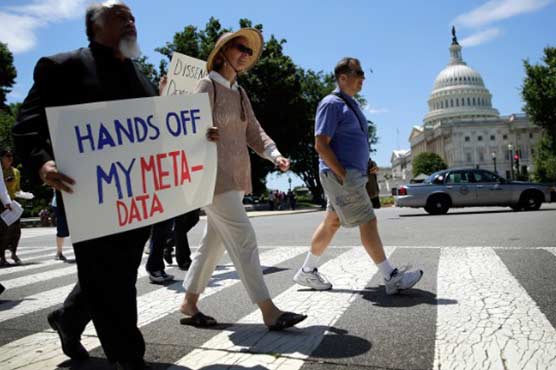
Academics Petition Against America's 'Blanket Surveillance


250 academics around the world signed an online petition calling for an end to "blank surveillance.

WASHINGTON: (AFP) - More than 250 academics from around the world signed an online petition this week calling for an end to "blanket mass surveillance" by intelligence agencies.
The petition said revelations of mass surveillance in documents leaked by former US National Security Agency (NSA) contractor Edward Snowden violate "a fundamental right" protected by international treaties, including the International Covenant on Civil and Political Rights and the European Convention on Human Rights.
"This has to stop," said the petition (academicsagainstsurveillance.net), an initiative of four academics from the University of Amsterdam.
"Without privacy people cannot freely express their opinions or seek and receive information. Moreover, mass surveillance turns the presumption of innocence into a presumption of guilt... secret and unfettered surveillance practices violate fundamental rights and the rule of law, and undermine democracy.
"The signatories of this declaration call upon nation states to take action. Intelligence agencies must be subjected to transparency and accountability. People must be free from blanket mass surveillance conducted by intelligence agencies from their own or foreign countries."
The signatories include academics in the Netherlands, Britain, Germany and the United States.
Among them are Oxford University's Joss Wright, Alessandro Acquisti of Carnegie Mellon University, Aleecia McDonald of the Center for Internet & Society at Stanford University and Bruce Schneier of the Berkman Institute for Internet and Society at Harvard Law School.
Other signatories were from as far as Australia, Hong Kong and New Zealand.
On Thursday, a report indicated that the NSA is making strides toward building a "quantum computer" that could break nearly any kind of encryption.
The Washington Post said leaked documents from Snowden indicate the computer would allow the secret intelligence agency to break encryption used to protect banking, medical, business and government records around the world.
Quantum computing has been a goal among commercial firms such as IBM because it could harness the power of atoms and molecules, vastly increasing speed and security of computers and other devices.
Snowden leaked explosive details of the secret surveillance schemes to media including The Washington Post and The Guardian.
After fleeing the United States, he ultimately landed in Russia, where he has been granted temporary asylum. US federal prosecutors have filed a criminal complaint against Snowden, charging him with espionage and felony theft of government property.