Infolinks In Text Ads

Showing posts with label Technology Updates. Show all posts

Thursday, January 2, 2014

Now we can all Watch Earth in HD | First Public Video of our Planet is Beamed back from Space


While satellites frequently beam down mesmerising images of Earth, detailed video footage of our planet has, up until now, been lacking.

Now one San Francisco-based start-up is aiming to change this by using its own low-cost satellite to provide the first ever public high-definition video of Earth from space.

The footage reveals details down to the metre-scale, such as cars moving on roads and vessels travelling through shipping lanes – all from a satellite positioned 600 kms above the planet.

The video was taken by the SkySat-1 satellite and showcases high-resolution views of Tokyo, Bangkok, Baltimore, Las Vegas, and Aleppo, Syria.

While it’s currently available for free, the group, Skybox Imaging, plans to sell the footage to businesses in the near future.

SkySat-1, which was launched in November, captured up to 90-second video clips at 30 frames per second to create the footage.

The U.S. group is now planning a constellation of 24 satellites that will be able to cover almost the entire expanse of the Earth.

Its larger goal is to sell what it can analyse about the global economy to companies, providing details such as supply chain monitoring and the movement of humanitarian aid.

‘The most revolutionary fact is that SkySat-1 was built and launched for more than an order of magnitude less cost than traditional sub-meter imaging satellites,’ said Tom Ingersoll, chief executive of Skybox.

Satellites today are capable of taking imagery better than a metre in resolution, but they weigh thousands of kilograms. SkySat-1 is 20 times smaller than traditional satellites.

The circuitry that drives it is about the size of a phone book and consumes less power than a 100w light bulb.

‘Their small size means we can afford to launch lots of satellites, and provide you lots of timely, sub-meter imagery and video, along with powerful derived analytics,’ the group said on their website.

SkySat-2, an identical version of SkySat-1, is scheduled to launch in early 2014.

It competitor, Vancouver-based UrtheCast, is also planning to mount both a still and video camera onto the International Space Station to provide a similar service.

Bluetooth Vibrating Smart Fork Aims to Coach you Back to Health


Hapifork, launched earlier this year, helps you maintain perfect timing between your bites so that you can remain healthy without counting steps on.

Hapifork, the vibrating Bluetooth fork was launched on Kickstarter earlier this year and is now available exclusively at Brookstone for 99.99 dollars.

The device has got two modes, Alarm and Coaching, and it issues vibrational feedback and a glowing red or green light at the end of its handle to tell whether the user has timed the bites properly,reports.

The device could be paired with an Android or iOS device to send feedback, can be USB synced to a PC or Mac, and has a built-in accelerometer to track hand motion, the report added.

First Private Supersonic Jet Promised in 2018


For billionaire executives, a 16-hour flight from Los Angeles to Tokyo is just too damn long to spend out of pocket. The Spike Aerospace S-512 promises to cut that time in half, and it won’t cost more than a measly $80 million.

The Boston-based Spike crew is made up of former Airbus, Bombardier, and Gulfstream engineers, along with a handful of entrepreneurs and investors that have set out to create the world’s first supersonic private jet.

Their goal is to create a new breed of business aircraft that can reach a cruising speed of Mach 1.6 (1,218 mph) and a top speed of Mach 1.8 (1,370 mph). At those speeds, the S-512 is theoretically capable of flying from New York to London in less than four hours, all while carrying up to 18 passengers in the opulence they’re accustomed to.

It’s no accident that Spike is quoting flight times over oceans and not the continental U.S.  The FAA prohibits supersonic flight over land, with few exceptions. But Boeing, Lockheed Martin, and even NASA have been working on ways to redesign supersonic aircraft to reduce the boom when breaking the speed of sound, but to no avail.

And Spike isn’t the first to promise a supersonic jet. Aerion announced plans in 2009 to create its own 12-seat supersonic business jet (which, ironically, was pegged to cost $80 million). That jet was supposedly due in 2015 — and Spike’s is promised to take off in December 2018.

Death Ray Drone Bot


In a move that wouldn’t look out of place in an Austin Powers movie, a student from Illinois has fitted a spider-shaped robot with laser beams.

The remote-controlled Death Ray Laser Drone Bot is fitted with a beam so powerful it can pop balloons and make paper and card burst into flames.

It was created by 20-year-old Drake Anthony who demonstrated the full force of his creation on his Styropyro YouTube channel.

To build the device, Anthony, 20, modified an Attacknid robot.

An Attacknid toy traditionally fires foam darts and disks, can walk around, and is designed to battle against other robots.

By removing the top of the robot and tweaking the firing mechanism, Anthony was able to replace the foam thrower with a 2W blue laser diode.

By connecting the laser to existing wires, Anthony was able to move the Attacknid using the robot’s remote control.

This control can make the Attacknid walk, spin the lasers 360-degrees, and fire the laser at targets.

He then fires the laser at a piece of paper, which bursts into flames within three seconds.

According to Anthony: ‘I present my most terrifying laser creation as of yet – the remote controlled death ray drone bot!

‘This beast packs a potent 2W blue laser that fries anything in it’s path. It can walk around and shoot its death ray at the touch of a button.’

Anthony posts videos under the username the DIY Laser Guy and has previously created other laser-powered devices.

For example, in May, the chemistry student from Southern Illinois University created a handheld lightsaber.

A video, created by Anthony, showed the invention cutting through paper, tape and cardboard – and even melting a ping pong ball.

This laser used a 9mm 450nm diode that was powered by two 18650 Li Ion batteries.

Syrian group Hacks Skype's Social Media Accounts


WASHINGTON (AFP) - The Syrian Electronic Army hacker group set its sights on Skype s social media accounts Wednesday to accuse Microsoft of spying on user data.

Microsoft-owned Skype s Twitter account displayed the message: "Don t use Microsoft emails(hotmail,outlook),They are monitoring your accounts and selling the data to the governments.

It was posted around 1030 GMT but was removed less than two hours later. Microsoft could not immediately be reached for comment.

The SEA account belongs to the Syrian Electronic Army, which backs the Damascus government.

In a posting on its own Twitter account, the SEA said "You can thank Microsoft for monitoring your accounts/emails using this details," and listed Microsoft CEO Steve Ballmer s contact information.

The group has previously hacked accounts of The New York Times, Agence France-Presse and other media organizations.

The SEA s latest attack appears to be linked to documents released by National Security Agency leaker Edward Snowden, which revealed the PRISM surveillance program.

PRISM is said to give the NSA and FBI easy access to the systems of nine of the world s top Internet companies including Google, Facebook, Microsoft, Apple, Yahoo and Skype.

The program apparently allowed the NSA to spy on audio and video calls using so-called secret backdoors. Skype has denied the existence of such access.

Tech blogs said that at one point, the Skype blog had the headline: "Hacked by Syrian Electronic Army.. Stop Spying!"

Skype s Twitter account was also said to have posted the message: "Stop spying on people! via Syrian Electronic Army."

But links provided by the SEA s Twitter account to Skype s blog and Facebook account did not work, and no SEA message appeared on those sites around 0030 GMT, having apparently been removed.

Wednesday, December 25, 2013

3D Printer Creates Working Loudspeaker


Engineers at Cornell University have printed an entire working loudspeaker in one operation using a 3D printer.

The device emerged from the printer ready to use, requiring only to be connected to an amplifier and sound source. In a demonstration the researchers played a clip from President Barack Obama’s State of the Union speech which mentioned 3D printing.

Although it is now possible to buy relatively cheap 3D printers which can make intricate parts from plastic, creating working electronic components remains a difficult problem.

Printers can be constructed with multiple cartridges for different materials, just as traditional 2D printers use differently coloured inks. But the large hurdle to overcome is that these materials need to be extruded at different temperatures and have different curing times, making printing one object with two or more materials troublesome.

If it becomes possible to do so cheaply then it would pave the way for entire products such as radios, cameras or mobile phones to be printed.

Creating the speaker involved printing a plastic housing, a flexible diaphragm, a conductive coil and a magnet. The conductive parts were created with silver ink , while the magnet was created from a viscous blend of strontium ferrite. The rest was printed with traditional plastic materials.

The project was led by mechanical engineering graduate students Apoorva Kiran and Robert MacCurdy, working with associate professor and 3D-printing pioneer Hod Lipson.

Creating a market for printed electronic devices, Lipson said, could be like introducing color printers after only black and white had existed: “It opens up a whole new space that makes the old look primitive.”

Saturday, December 21, 2013

Lenovo Yoga goes Enterprise


Lenovo has launched a new range of enterprise devices, including a convertible ThinkPad S1 Yoga and new ThinkPad ultrabooks T440,T440s and X240s Ultrabooks. All these devices are powered by Intel’s fourth generation Haswell Core processors.

The ThinkPad S1 Yoga is a multi-mode device designed to function optimally in different scenarios, eliminating the need of separate ultrabooks and tablet. Like the first Yoga, this device can do a 360 degree flip from laptop mode to stand mode and tent mode to tablet mode. The keyboard is disabled when it is not in the laptop mode. With a pre-loaded Intel SBA platform, it allows better security and business continuity. ThinkPad S1 Yoga is priced at Rs 80,000 onwards.

The ThinkPad T440 Ultrabook has a 14-inch HD or HD+ screen with optional multitouch capability and a trackpad that supports Windows 8 gestures. Priced at Rs 78,000 onwards, the device comes with 1TB storage and 10 hours + battery life. With military-specific durability and glass fiber design for a touch, it is a durable device.

The ThinkPad T440s has a carbon fiber top cover that makes the device light and durable. It has has a wide range of connection options and touch capability with Windows 8 Pro. T440s is priced at Rs 90,000 onwards

The ThinkPad X240s Ultrabook is the thinnest and lightest full featured ThinkPad yet. Weighing just 1.28 kg, this device comes with full HD IPS touch screen display, carbon fibre construction and a glass TrackPad. This premium device is available at Rs 95,000 onwards.

Euro Satellite to Count a BILLLION Stars, find Origin of Milky Way


The European Space Agency’s billion-star mapper Gaia blasted off this morning aboard a Soyuz rocket on its mission to study millions of suns.

The satellite has been dispatched to create the most accurate map yet of our galaxy, using accurate measurements of positions and motions of one per cent of the roughly 100 billion stars in the Milky Way to answer questions about its origin and evolution.

Gaia will check out each of the billion stars an average of 70 times each over its five years of operation. Each time, it will plot the position of the sun and its key physical properties, like brightness, temperature and chemical composition.

The huge census should provide boffins with the position, motion and properties of the stars to give the most complete picture of the galaxy yet.

“Gaia represents a dream of astronomers throughout history, right back to the pioneering observations of the ancient Greek astronomer Hipparchos, who catalogued the relative positions of around a thousand stars with only naked-eye observations and simple geometry,” said Alvaro Giménez, ESA’s director of science and robotic exploration.

“Over 2000 years later, Gaia will not only produce an unrivalled stellar census, but along the way has the potential to uncover new asteroids, planets and dying stars.”

Over 400 different people at scientific institutes across Europe will end up processing and analysing the huge amount of data Gaia will collect, estimated to exceed one petabyte.

The Soyuz booster lifted off without a hitch at the scheduled time of 9.12am GMT from Europe’s spaceport in French Guiana. Around ten minutes later, after the first three stages had separated, the Fregat upper stage ignited and carried the probe into a temporary parking space in a 175km high orbit.

From there, Fregat fired again to take Gaia into its transfer orbit, before it separated from the upper stage 42 minutes after blastoff. ESA boffins in Darmstadt in Germany have already taken control of the spacecraft and started booting it up.

The sunshield, which both protects the satellite from soaring temperatures and carries solar cells to power the craft, has been deployed and Gaia is now en route to the stable point at L2, around 1.5m km from Earth as seen from the Sun. Tomorrow, mission control will get Gaia to perform the first of two critical thruster firings to make sure its on the right path to its new home, followed by the second around 20 days later to stick it in operational orbit.

“After years of hard work and determination of everyone involved in the mission, we are delighted to see our Gaia discovery machine on the road to L2, where we will continue the noble European tradition of star charting to decipher the history of the Milky Way,” said Giuseppe Sarri, ESA’s Gaia project manager.

US Space Walkers get Ready for Orbiting Lab Repairs

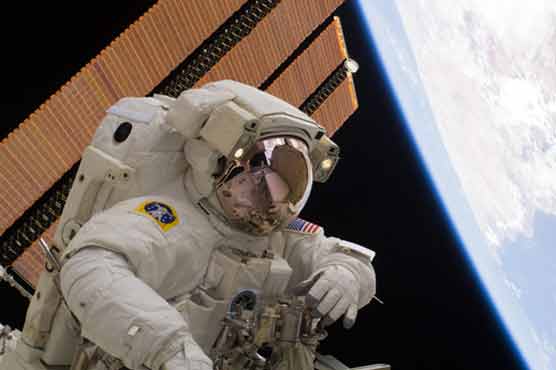
WASHINGTON (AFP) - Two American astronauts are to step out Saturday on the first of three spacewalks to replace a broken cooling pump at the orbiting International Space Station.

The spacewalk is set to begin at 7:10 am (1210 GMT) and last six and a half hours, NASA said.

As the ISS spins around the Earth at a speed of five miles (eight kilometers) per second, veteran spacewalker Rick Mastracchio will lead the way, followed by Mike Hopkins, making his first venture outside the global research lab.


From the inside, Japanese astronaut Koichi Wakata will operate the station's 50-foot (15-meter) robotic arm, hoisting Mastracchio and hefty equipment from one section of the lab to another.

"There are quite a bit of arm maneuvers throughout all of these EVAs so I'm sure Koichi will be getting a workout," said lead spacewalk officer Allison Bolinger, using the NASA acronym for spacewalk: extravehicular activity (EVA).

While Mastracchio, 53, soars around with his boots attached to a foot-plate on the robotic arm, Hopkins, 44, will be the designated free-floating astronaut of the day.

The men's first task is to disconnect the ammonia pump, which is about the size of a refrigerator.

On the second spacewalk, set for Monday, the astronauts are to remove the pump so it can be replaced with a spare that was already stowed at the ISS.

A third spacewalk is planned for Christmas Day, when the failed pump will be shuttled away and final installations made on its replacement.

However, there is a chance the astronauts will be able to complete all their work in two spacewalks, NASA has said.

If not, the Christmas Day outing would be the first since 1974, when a pair of NASA astronauts "stepped outside the Skylab space station to retrieve film from a telescope and photograph Comet Kohoutek," the US space agency said.