Infolinks In Text Ads

Friday, January 3, 2014

One More Polio Case Surfaces in Karachi


KARACHI: One more fresh case of polio has been reported in Karachi with the beginning of New Year, thus, proving that the virus has not been eradicated completely in the country, Geo News reported Wednesday.

The victim child named Fatima belongs to Karachi and is the resident of Gadap area. The National Institute of Health has verified the virus attack. The samples of the affected girl were collected on December 19.

It may be mentioned that a total number of 85 polio cases were reported in the year 2013.

China says Vaccines didn’t Cause 9 Kids Deaths


BEIJING: Vaccines did not cause the deaths of nine children shortly after they were inoculated for hepatitis in a Chinese government program and no links have been found in eight other cases still being investigated, health officials said Friday after safety concerns arose.

At the same time, China's national product safety watchdog said three drug makers - one of whom was scrutinized over the recent deaths - had suspended production because they failed to meet new manufacturing standards.

Public confidence in Chinese health authorities and the country's drug safety regime is shaky at best, though improvements have been made in recent years since government agencies withheld information about the spread of SARS and bird flu.

Concerns over vaccine safety have surfaced after reported problems with vaccines for encephalitis, hepatitis B and other diseases. In those cases, the health ministry said the vaccines had been improperly stored but were unrelated to subsequent illnesses that were reported.

In the recent cases, China's National Health and Family Planning Commission investigated 17 deaths of children between Dec. 13 and Tuesday shortly after they received shots for the liver disease hepatitis B, the commission said in a statement on its website.

Nine were clearly unrelated to the vaccines, the commission said, while a preliminary investigation found no links in the remaining cases. The cause of those eight deaths would only be confirmed after autopsies are completed.

The causes of the deaths instead were acute pneumonia, suffocation, kidney failure, severe diarrhea, death of intestinal tissue, sudden infant death, congenital heart disease and so on, the commission said. The children were all younger than 5 and lived in nine provinces across China, the commission said without further details.

Late last month after the first few deaths were reported, Chinese authorities sent health experts to investigate the manufacturer of most of the hepatitis B vaccines, Biokangtai, a drug maker based in the southern city of Shenzhen.

The China Food and Drug Administration said Friday that Biokangtai and two other manufacturers of hepatitis B vaccines had to suspend production because they failed to meet new safety and quality standards for manufacturing. It said the companies could resume production after obtaining the new certification.

Australia Experiences Hottest Year On Record


SYDNEY (AFP) - Australia experienced its hottest year on record in 2013, the Bureau of Meteorology said Friday, enduring the longest heatwave ever recorded Down Under as well as destructive bushfires.

"2013 was Australia s warmest year since records began in 1910," the bureau said in its annual climate statement, released as inland areas of the country suffer scorching heatwave conditions.

"Mean temperatures across Australia have generally been well above average since September 2012. Long periods of warmer-than-average days have been common, with a distinct lack of cold weather."

The bureau said that Australia s 2012-2013 summer was the warmest on record, and included a prolonged national heatwave which ended on January 19, 2013 -- the first day since 31 December, 2012 that it did not reach 45 degrees Celsius (113 F) somewhere in the nation.

Spring was also the warmest on record and winter the third warmest, meaning that overall, the annual national mean temperature was 1.20 degrees Celsius above average.

The bureau pointed to destructive fires, in the island state of Tasmania in early 2013, which were followed by a record warm and dry winter across the country.

Spring appeared to arrive early and culminated in "the most destructive fires in the Sydney region since at least 1968".

The weather authority, which last year introduced new colours on its temperature scale to cater for more extreme highs, said the Australian warming was very similar to that seen on the global scale.

"And the past year emphasises that the warming trend continues," it said.

This year is also starting warmly, with records already under threat in some Outback towns. In Moomba in northern South Australia, the temperature topped 48 degrees Celsius on Thursday. The highest temperature ever recorded in Australia was 50.7 Celsius in Oodnadatta in 1960.

Sarah Perkins, a climate system science researcher at the University of New South Wales in Sydney, said the report confirmed that the impacts of global warming were starting to be felt.

"While records are occasionally broken here and there, the amount of temperature records broken in the last year is extraordinary," she said.

"Studies have already shown that the risk of summers like 2013 occurring have increased by up to five-fold, because of human induced climate change."

Professor Roger Jones, a lead author on the Intergovernmental Panel on Climate Change s Working Group II Fifth Assessment Report to be released later this year, said the findings should concern all Australians.

"While the increases in average temperatures may seem to be benign -- heat waves are increasing faster than those averages," said Jones, a research fellow at Victoria University in Melbourne.

"Why heat waves are longer and hotter than anticipated is not yet clear, but they are contributing to greater fire danger and heat stress than projected by climate impact studies, affecting animals, plants and humans."

University of Melbourne climate scientist David Karoly said the record high average temperature was remarkable because it did not occur in an "El Nino" year, when conditions in Australia are usually drier and warmer.

He said that in climate modelling experiments conducted so far it was not possible to reach such a temperature record due to natural climate variations alone.

"Hence, this record could not occur due to natural variability alone and is only possible due to the combination of greenhouse climate change and natural variability on Australian average temperature," he said.

Ian Lowe, emeritus professor of science, technology and society at Queensland s Griffith University and president of the Australian Conservation Foundation, said the report confirmed expectations.

"2013 was the hottest year on record for Australia, showing that there is no rational basis for the claim that warming has slowed in recent years," he said.

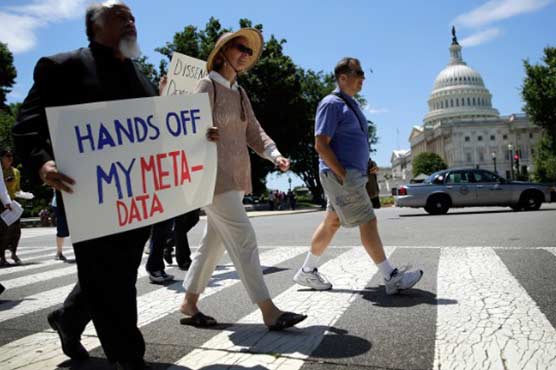
Academics Petition Against America's 'Blanket Surveillance


250 academics around the world signed an online petition calling for an end to "blank surveillance.

WASHINGTON: (AFP) - More than 250 academics from around the world signed an online petition this week calling for an end to "blanket mass surveillance" by intelligence agencies.
The petition said revelations of mass surveillance in documents leaked by former US National Security Agency (NSA) contractor Edward Snowden violate "a fundamental right" protected by international treaties, including the International Covenant on Civil and Political Rights and the European Convention on Human Rights.
"This has to stop," said the petition (academicsagainstsurveillance.net), an initiative of four academics from the University of Amsterdam.
"Without privacy people cannot freely express their opinions or seek and receive information. Moreover, mass surveillance turns the presumption of innocence into a presumption of guilt... secret and unfettered surveillance practices violate fundamental rights and the rule of law, and undermine democracy.
"The signatories of this declaration call upon nation states to take action. Intelligence agencies must be subjected to transparency and accountability. People must be free from blanket mass surveillance conducted by intelligence agencies from their own or foreign countries."
The signatories include academics in the Netherlands, Britain, Germany and the United States.
Among them are Oxford University's Joss Wright, Alessandro Acquisti of Carnegie Mellon University, Aleecia McDonald of the Center for Internet & Society at Stanford University and Bruce Schneier of the Berkman Institute for Internet and Society at Harvard Law School.
Other signatories were from as far as Australia, Hong Kong and New Zealand.
On Thursday, a report indicated that the NSA is making strides toward building a "quantum computer" that could break nearly any kind of encryption.
The Washington Post said leaked documents from Snowden indicate the computer would allow the secret intelligence agency to break encryption used to protect banking, medical, business and government records around the world.
Quantum computing has been a goal among commercial firms such as IBM because it could harness the power of atoms and molecules, vastly increasing speed and security of computers and other devices.
Snowden leaked explosive details of the secret surveillance schemes to media including The Washington Post and The Guardian.
After fleeing the United States, he ultimately landed in Russia, where he has been granted temporary asylum. US federal prosecutors have filed a criminal complaint against Snowden, charging him with espionage and felony theft of government property.

Drone Bombs?: US Drones to make Decisions on their Own


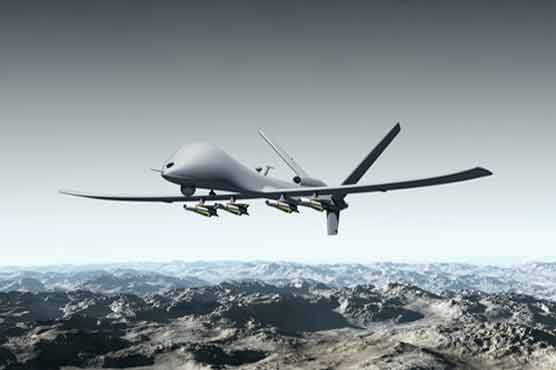
(Web Desk) - Despite international criticism, US has planned to arm military drones with stronger chemical weapons that will act as ‘drone-bombs’. It has also aimed to equip drones with improved sensors and navigation equipment in order to cut down expenses.

According to a report published in UK newspaper, the U.S. Department of Defence (DoD) revealed its Unmanned Systems Integrated Roadmap, setting out its technology aims for the next 25 years.

Drones that can choose to deviate from a set mission and hunt in ‘swarms’ could be patrolling skies within the next 25 years, according to a new roadmap.

Unmanned aircraft carrying stronger chemical weapons could also be on the horizon, the U.S. Department of Defence (DoD) revealed in its Unmanned Systems Integrated Roadmap.

While the document sets out plans for unmanned maritime, land and air vehicles, there is a lot of focus on the future capability of controversial drones, which, if the plans come to fruition, could deviate from mission commands set by humans if they spot a better target.

Current drones require intensive manpower on the ground to fly, which is expensive and the DoD plans on cutting costs by letting the machines make more decisions themselves.

At the moment drones follow precise commands to complete a predetermined step-by-step mission, but the unmanned aircraft of the future could deviate from tasks, informed by ‘laws’ that govern their behaviour, laid out in algorithms and machine learning, as well as advanced sensors.

While drones, or unmanned aircraft, currently use GPS to navigate war zones and remote areas, the satellite signals used by the systems can be jammed easily, so the Defence Advanced Research Projects Agency (DARPA) is working on jam-proof ‘inertial guidance systems’.

The DoD s roadmap also features plans for deadly ‘swarms’ of drone-bombs that are launched from an unmanned ‘mothership’ to circle the skies while a human operator searches for targets for the drones to crash into, guided by the bots’ on-bard cameras.

Thanks to the unmanned mothership, the kamikaze drones could have a range of over 250 nautical miles (463km) the roadmap said.

The weapons dropped by more traditional drones are also set to get more deadly under the plans, as researchers are working on ‘energetic nanoparticles’ with a larger surface areas so that the chemicals within the ammunition reach faster and create a more powerful explosion.

The technologies combined are intended to help the U.S. military be ‘more effective through greater automation and greater performance,’ the report says.

Thursday, January 2, 2014

Now we can all Watch Earth in HD | First Public Video of our Planet is Beamed back from Space


While satellites frequently beam down mesmerising images of Earth, detailed video footage of our planet has, up until now, been lacking.

Now one San Francisco-based start-up is aiming to change this by using its own low-cost satellite to provide the first ever public high-definition video of Earth from space.

The footage reveals details down to the metre-scale, such as cars moving on roads and vessels travelling through shipping lanes – all from a satellite positioned 600 kms above the planet.

The video was taken by the SkySat-1 satellite and showcases high-resolution views of Tokyo, Bangkok, Baltimore, Las Vegas, and Aleppo, Syria.

While it’s currently available for free, the group, Skybox Imaging, plans to sell the footage to businesses in the near future.

SkySat-1, which was launched in November, captured up to 90-second video clips at 30 frames per second to create the footage.

The U.S. group is now planning a constellation of 24 satellites that will be able to cover almost the entire expanse of the Earth.

Its larger goal is to sell what it can analyse about the global economy to companies, providing details such as supply chain monitoring and the movement of humanitarian aid.

‘The most revolutionary fact is that SkySat-1 was built and launched for more than an order of magnitude less cost than traditional sub-meter imaging satellites,’ said Tom Ingersoll, chief executive of Skybox.

Satellites today are capable of taking imagery better than a metre in resolution, but they weigh thousands of kilograms. SkySat-1 is 20 times smaller than traditional satellites.

The circuitry that drives it is about the size of a phone book and consumes less power than a 100w light bulb.

‘Their small size means we can afford to launch lots of satellites, and provide you lots of timely, sub-meter imagery and video, along with powerful derived analytics,’ the group said on their website.

SkySat-2, an identical version of SkySat-1, is scheduled to launch in early 2014.

It competitor, Vancouver-based UrtheCast, is also planning to mount both a still and video camera onto the International Space Station to provide a similar service.

Bluetooth Vibrating Smart Fork Aims to Coach you Back to Health


Hapifork, launched earlier this year, helps you maintain perfect timing between your bites so that you can remain healthy without counting steps on.

Hapifork, the vibrating Bluetooth fork was launched on Kickstarter earlier this year and is now available exclusively at Brookstone for 99.99 dollars.

The device has got two modes, Alarm and Coaching, and it issues vibrational feedback and a glowing red or green light at the end of its handle to tell whether the user has timed the bites properly,reports.

The device could be paired with an Android or iOS device to send feedback, can be USB synced to a PC or Mac, and has a built-in accelerometer to track hand motion, the report added.

First Private Supersonic Jet Promised in 2018


For billionaire executives, a 16-hour flight from Los Angeles to Tokyo is just too damn long to spend out of pocket. The Spike Aerospace S-512 promises to cut that time in half, and it won’t cost more than a measly $80 million.

The Boston-based Spike crew is made up of former Airbus, Bombardier, and Gulfstream engineers, along with a handful of entrepreneurs and investors that have set out to create the world’s first supersonic private jet.

Their goal is to create a new breed of business aircraft that can reach a cruising speed of Mach 1.6 (1,218 mph) and a top speed of Mach 1.8 (1,370 mph). At those speeds, the S-512 is theoretically capable of flying from New York to London in less than four hours, all while carrying up to 18 passengers in the opulence they’re accustomed to.

It’s no accident that Spike is quoting flight times over oceans and not the continental U.S.  The FAA prohibits supersonic flight over land, with few exceptions. But Boeing, Lockheed Martin, and even NASA have been working on ways to redesign supersonic aircraft to reduce the boom when breaking the speed of sound, but to no avail.

And Spike isn’t the first to promise a supersonic jet. Aerion announced plans in 2009 to create its own 12-seat supersonic business jet (which, ironically, was pegged to cost $80 million). That jet was supposedly due in 2015 — and Spike’s is promised to take off in December 2018.

Death Ray Drone Bot


In a move that wouldn’t look out of place in an Austin Powers movie, a student from Illinois has fitted a spider-shaped robot with laser beams.

The remote-controlled Death Ray Laser Drone Bot is fitted with a beam so powerful it can pop balloons and make paper and card burst into flames.

It was created by 20-year-old Drake Anthony who demonstrated the full force of his creation on his Styropyro YouTube channel.

To build the device, Anthony, 20, modified an Attacknid robot.

An Attacknid toy traditionally fires foam darts and disks, can walk around, and is designed to battle against other robots.

By removing the top of the robot and tweaking the firing mechanism, Anthony was able to replace the foam thrower with a 2W blue laser diode.

By connecting the laser to existing wires, Anthony was able to move the Attacknid using the robot’s remote control.

This control can make the Attacknid walk, spin the lasers 360-degrees, and fire the laser at targets.

He then fires the laser at a piece of paper, which bursts into flames within three seconds.

According to Anthony: ‘I present my most terrifying laser creation as of yet – the remote controlled death ray drone bot!

‘This beast packs a potent 2W blue laser that fries anything in it’s path. It can walk around and shoot its death ray at the touch of a button.’

Anthony posts videos under the username the DIY Laser Guy and has previously created other laser-powered devices.

For example, in May, the chemistry student from Southern Illinois University created a handheld lightsaber.

A video, created by Anthony, showed the invention cutting through paper, tape and cardboard – and even melting a ping pong ball.

This laser used a 9mm 450nm diode that was powered by two 18650 Li Ion batteries.

Drivers Distracted 10 per cent of the Time behind the Wheel


Drivers eat, reach for the phone, text, or otherwise take their eyes off the road about 10 per cent of the time they are behind the wheel, according to a new US study.

The risks of distracted driving were greatest for newly licensed teen drivers, who were substantially more likely than adults to be involved in a crash or near miss while texting or engaging in tasks secondary to driving, according to the researchers from the National Institutes of Health and Virginia Tech Transportation Institute in the US.

“Anything that takes a driver’s eyes off the road can be dangerous,” said study co-author Bruce Simons-Morton, of the Eunice Kennedy Shriver National Institute of Child Health and Human Development, the NIH institute where the study was conducted.

“But our study shows these distracting practices are especially risky for novice drivers, who haven’t developed sound safety judgement behind the wheel,” Simons-Morton said.

The study analysed video from cameras installed in the cars of about 150 drivers in the Washington, DC, area and in southwestern Virginia.

About one-quarter of the drivers were novices, having had their license for no more than three weeks. The remaining drivers had, on average, 20 years of experience and ranged in age from 18 to 72.

Experienced adults were more than twice as likely to crash or have a near miss when dialling a cell phone as when they did not dial and drive, but did not have an increased risk while engaging in other tasks secondary to driving.

However, the researchers found that distracted driving substantially increased the risks for new drivers. Compared to when they were not involved in secondary tasks, novice teen drivers were eight times more likely to crash or have a near miss when dialling, seven to eight times more likely when reaching for a phone or other object, almost four times more likely when texting, and three times more likely when eating.

Talking on a cell phone did not increase risk among the adult or teenage drivers However, because talking on a cell phone is preceded by reaching for the phone and answering or dialling – which increase risk greatly – the study authors concluded that their results provide support for licensing programmes that restrict electronic device use, particularly among novice drivers. The study was published in the New England Journal of Medicine.